
Staying alert on long drives and late shifts
Practical habits for drivers, riders and night-shift workers, and the hard limits of what caffeine can do.

01Caffeine is not sleep
Let us start with the most important point. Caffeine can make you feel more alert for a while, but it does not replace sleep, and it cannot fully fix the reaction time lost to tiredness. If you are drowsy behind the wheel, the only safe answer is to stop and rest.
02Before you start
- Sleep properly the night before a long drive or a night shift. A short nap before a night shift helps.
- Eat a balanced meal, not a very heavy one.
- Plan breaks: roughly every two hours on the road.
03During the drive or shift
- Small, spaced caffeine doses work better than one big one. A candy or half a cup of coffee every few hours keeps you steadier.
- Water beats sugary drinks for staying fresh.
- Light snacks: nuts, fruit, roasted chana. Avoid large greasy meals that bring on a slump.
- Move at every stop: walk, stretch, get daylight if there is any.
- The coffee nap: caffeine followed by a 15-minute nap at a safe stop is one of the better-studied tricks for sleepy drivers.
04After the shift
Stop caffeine about six hours before you plan to sleep, even if that is 10 am after a night shift. Use blackout curtains and keep a regular sleep window. Read the caffeine timing guide for more.
05Warning signs
Yawning repeatedly, drifting out of your lane, missing exits or not remembering the last few kilometres all mean you need to stop. Caffeine will not fix them.
Fin.

Designer of ENRJI's product, packaging and website. Writes about caffeine, snacking and design. This article is general information, not medical advice; see the disclaimer.
Keep reading

Why you crash after lunch, and 7 ways to beat it
The 2 pm dip is part of your body clock, not just your lunch. Here is what is happening and what actually helps.
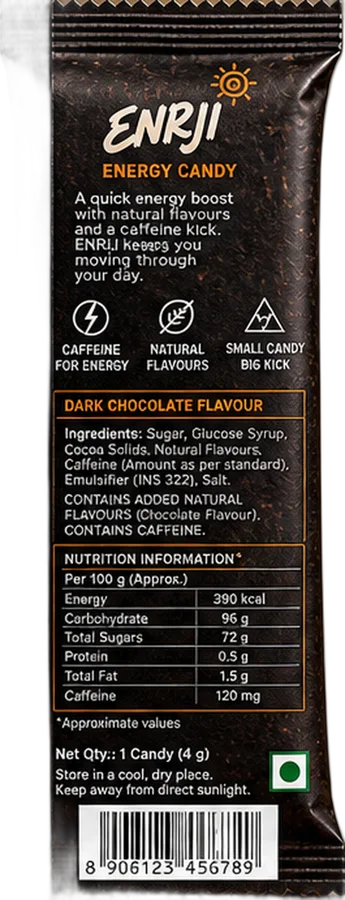
How to read a candy label in India
Veg marks, INS numbers, per-100 g nutrition and caffeine warnings: a quick guide to the back of the pack.

What is INS 322? Lecithin explained
The emulsifier you will find in most chocolate, what it does, where it comes from and who should check its source.