
8 packaging lessons for small snack brands
What we learned designing for packs smaller than a phone, for anyone launching a snack in India.
01Small packs, big decisions
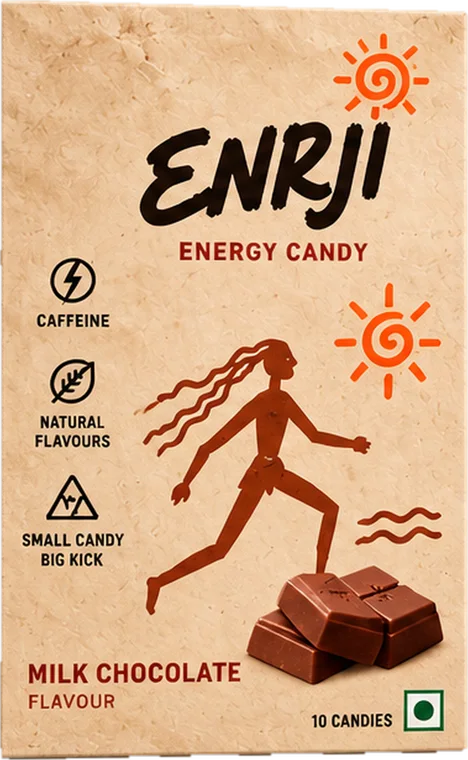
Small formats are popular with Indian snack brands because they lower the price of trying something new. But every millimetre counts. These are the principles that shaped ENRJI's packs, and they apply to any small snack.
02The eight lessons
- Pick one hero. Brand name or illustration should dominate. Two heroes on a small pack means neither wins.
- Design for 1.5 metres. Print the pack at actual size, stick it on a shelf and step back. If you cannot tell the flavour, the colour coding is not strong enough.
- Colour-code flavours, keep the layout fixed. Shoppers learn the layout once and then pick by colour.
- Respect the regulatory zone. Plan space for the veg mark, FSSAI licence, ingredients, nutrition and warnings from day one. Squeezing them in later ruins layouts.
- Test on the real material. Metallised film, paperboard and plain plastic make colours look very different. Ask your printer for a proof on the actual substrate.
- Mind the seals. Crimps and fin seals eat into artwork. Keep text away from them.
- Make the box a billboard. A box of 10 often sits open on a counter; the inside flap and the lid are advertising space.
- Photograph it early. Your pack will live online as much as in stores. Check it looks right as a 200-pixel thumbnail.
03Common mistakes
Too many claims ("natural! fast! tasty! new!"), tiny low-contrast text and fonts that only work on screen. Every extra claim weakens the others.
04Further reading
See how these ideas came together in Designing the ENRJI stick pack and the design case study.
Fin.

Designer of ENRJI's product, packaging and website. Writes about caffeine, snacking and design. This article is general information, not medical advice; see the disclaimer.
Keep reading
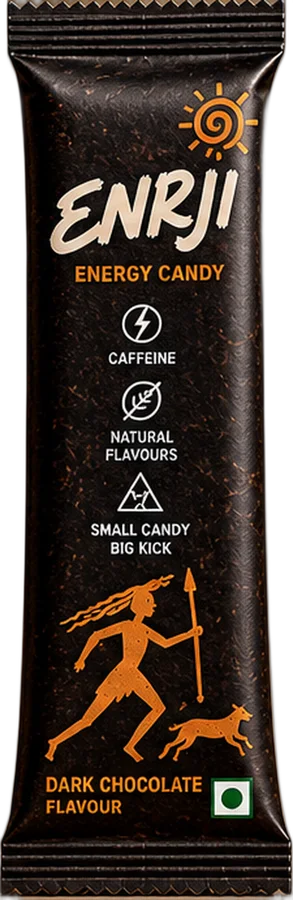
Designing the ENRJI stick pack
Rock-art hunters, a spiral sun and a finger-sized canvas: the story behind the packaging.
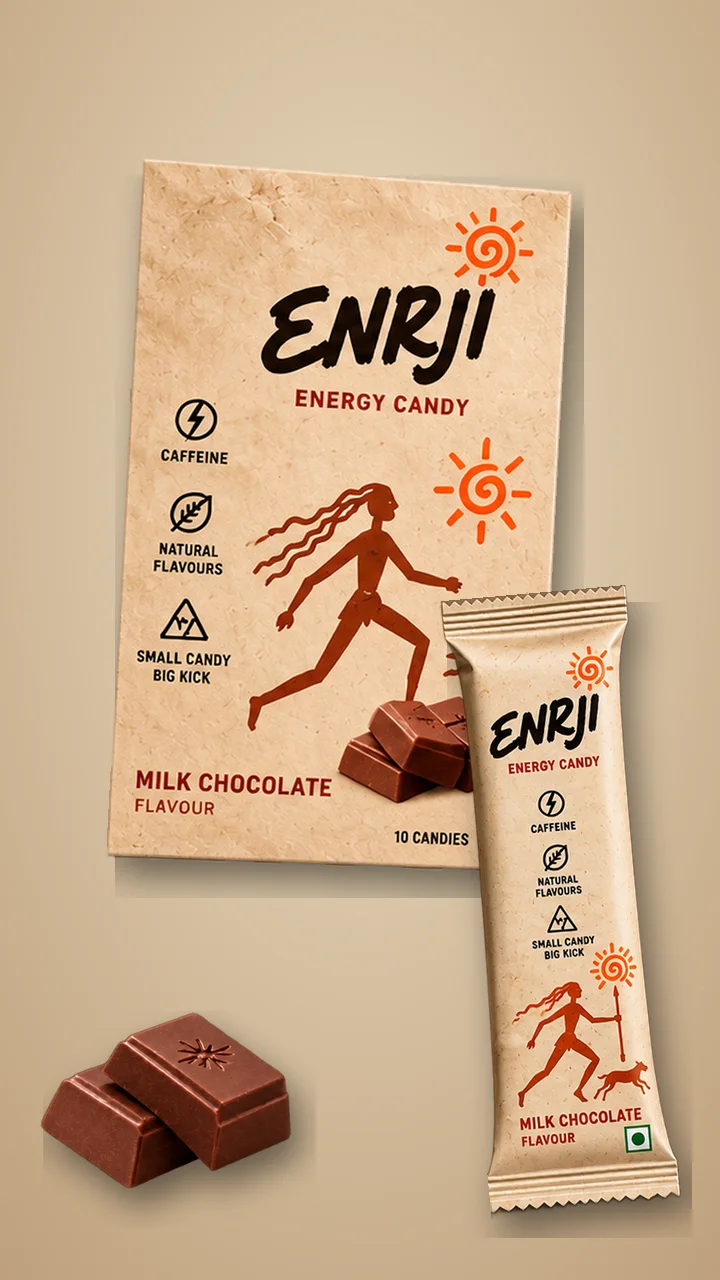
Why ENRJI is brown and cream
Choosing a palette that says chocolate, energy and warmth without shouting like a typical energy brand.
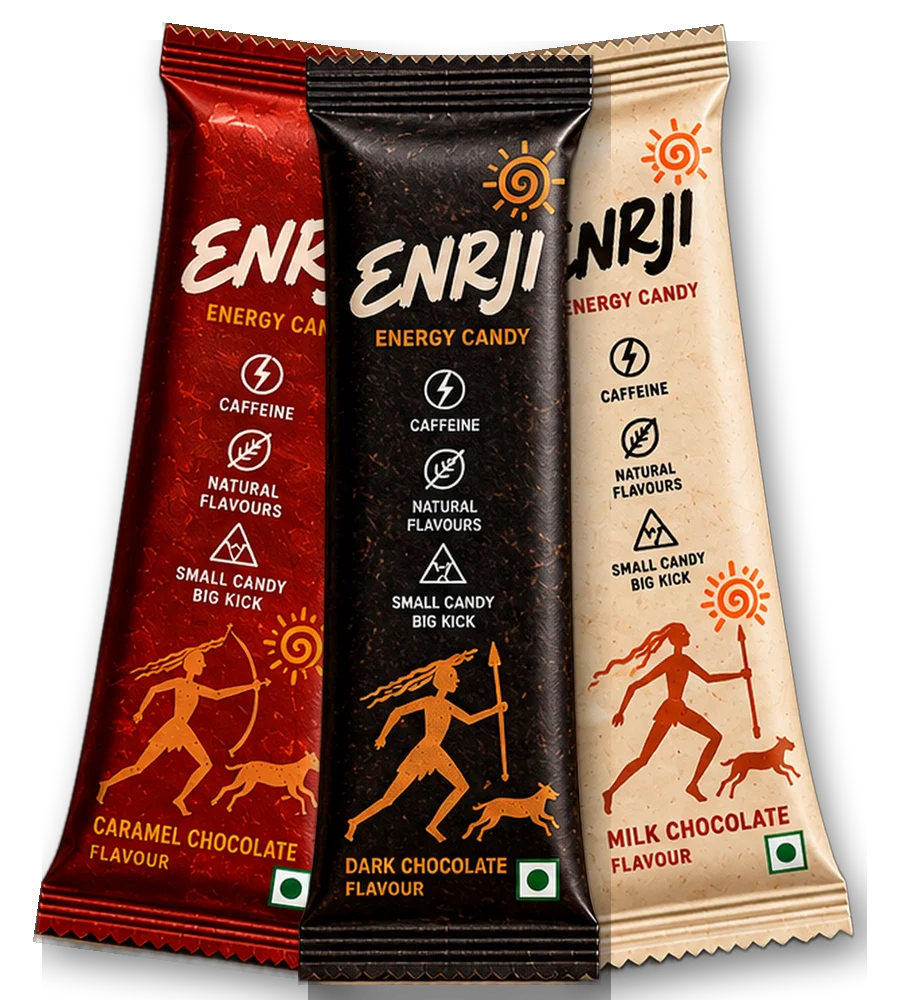
Can a ₹2 candy take on the energy drink?
Energy candy went from a niche idea to a sold-out launch in four minutes. A breakdown of why the format works, what it costs per milligram of caffeine, and what could stop it.