
Can a ₹2 candy take on the energy drink?
Energy candy went from a niche idea to a sold-out launch in four minutes. A breakdown of why the format works, what it costs per milligram of caffeine, and what could stop it.
01Quick context
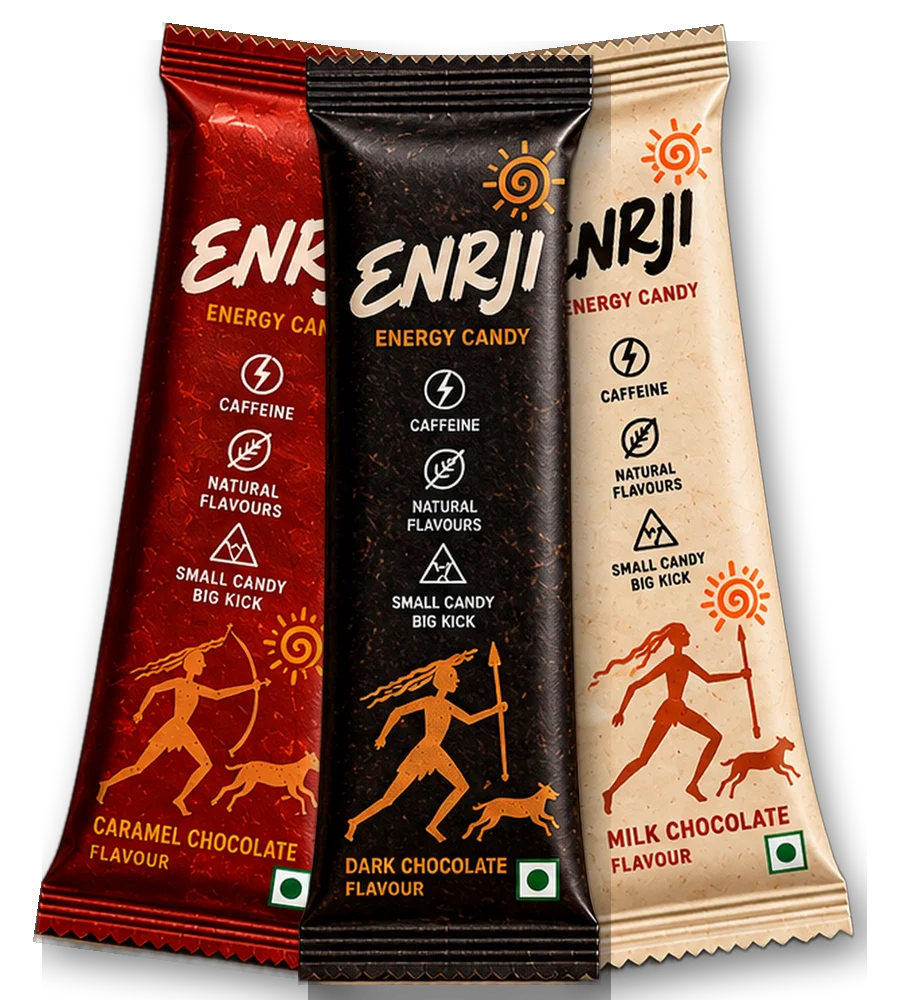
In late October 2026 a caffeine candy launch in India sold its first 100 jars in roughly four minutes, according to Udayan Walvekar's breakdown "RIP Red Bull?". The product in that launch was a 3.5 g candy with 40 mg of caffeine priced at ₹2. That one data point says a lot: people will pay for caffeine that does not come in a can.
This piece uses that analysis as a starting point and looks at the energy-candy format as a category: who buys it, how big the market might be, why the economics are unusual, and what could go wrong. Figures quoted from the article are credited; everything else is our own reading.
02Who is it for?
The first buyers are gym-goers. They already take caffeine before training through pre-workout powders and tablets, and they already compare products on price per milligram. A candy simply drops into a habit they have.
The bigger opportunity is everyone who needs a lift at work but cannot carry a fridge: delivery riders, drivers on long shifts, night-shift staff, students in exam season (adults only) and desk workers fighting the afternoon dip. The article notes India has roughly 1.2 crore gig workers alone. These are people for whom ₹20 to ₹125 for a can is a real decision, and ₹2 is not.
03How big is the market?
Walvekar sizes the market three ways. The broad pool of everything people buy for energy is estimated at about ₹10,500 to 13,000 crore a year. Energy drinks alone account for about ₹9,500 to 12,000 crore. A new brand capturing 1 to 5% of that by its third year would be a ₹100 to 600 crore business.
Market sizing, ₹ crore per year (midpoints)
Those are top-down numbers, so treat them as a ceiling. The useful takeaway is that even a small share of an existing habit is a large business.
04Why the format makes sense
Commitment. A tub of pre-workout is a planned purchase. A ₹2 candy is an impulse buy at the counter. The article compares this to the sachet revolution in Indian shampoo: shrink the pack and the price, and suddenly everyone can try it.
Cost. Per milligram of caffeine, the candy in that launch worked out more than five times cheaper than Sting and about 33 times cheaper than Red Bull, by Walvekar's maths.
Relative cost per mg of caffeine (candy = 1)
Two structural advantages explain the gap. Tax: sugar confectionery is taxed at a much lower GST rate than caffeinated drinks, which the article puts at 5% versus 40%. Logistics: a few grams of candy needs no bottling, no cold chain and very little freight weight compared with 250 ml of liquid.
GST rate, %
05The rules
Caffeinated drinks in India are tightly regulated: FSSAI sets caffeine limits and requires warnings. The article reports that in June 2026 FSSAI ordered high-caffeine drinks to stop using the words "energy drink" on labels, a move that was challenged in the Delhi High Court. Walvekar found no FSSAI rule written specifically for caffeine candy.
That gap is an opportunity and a risk. A responsible energy-candy brand should behave as if the rules already apply: clear caffeine warnings, honest per-serving numbers and no marketing to children. We cover what a good label shows in How to read a candy label in India.
06Can anyone copy it?
Yes, and that is the honest answer. Making a caffeinated candy is not hard. What is hard is distribution, trust and a brand people ask for by name. Large FMCG companies rarely build small brands from scratch; they buy them once they work. The article points to Hindustan Unilever's acquisition of Minimalist as the template for that kind of exit.
07Where the category can grow
- Depth: more doses in the same format, from low-caffeine to stronger options, and caffeine-free versions for the evening.
- Frequency: more moments in the day, though caffeine has a natural ceiling (see how much caffeine is safe).
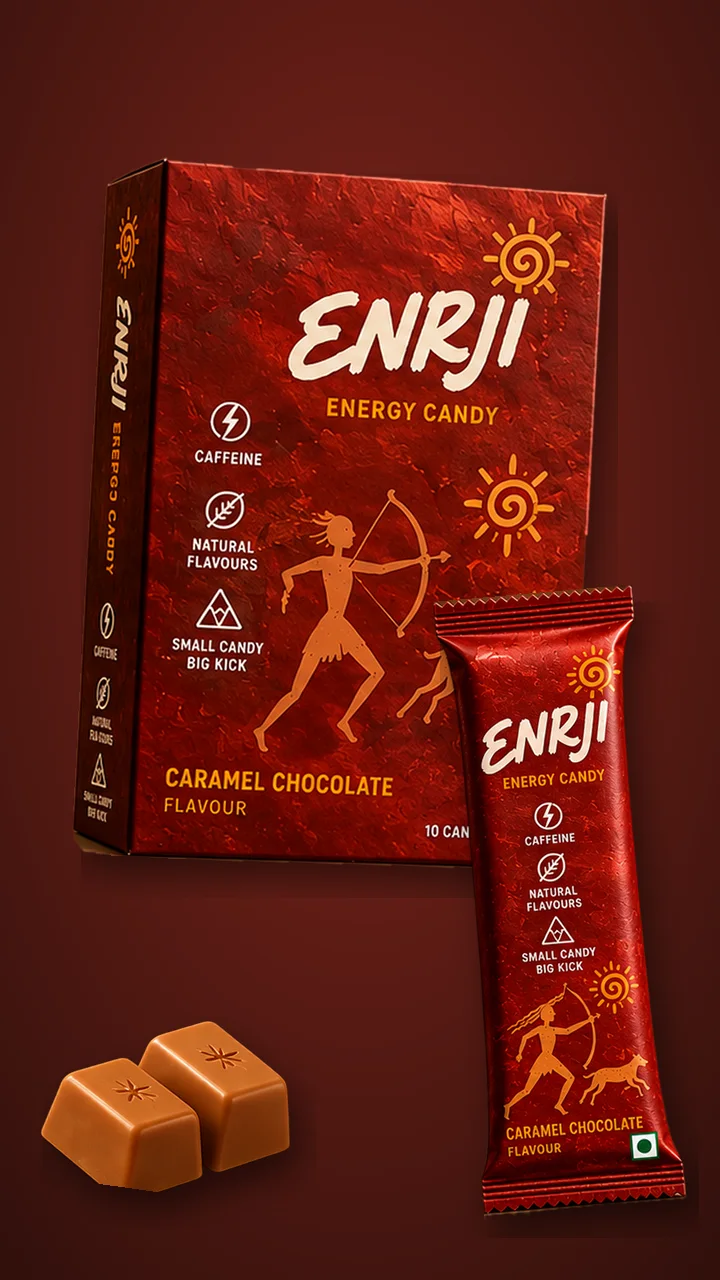
- Pack sizes: single pieces at the kirana counter, pocket tins, jars for gyms and offices. ENRJI's own range follows this ladder: 4 g sticks, boxes of 10 and an 8 g bar.
- New audiences: drivers, riders, night-shift workers and office teams.
08What to watch
Three things will decide whether energy candy becomes a category or stays a fad. First, whether shopkeepers want to stock a ₹2 item with thin margins. Second, whether regulators write candy-specific caffeine rules. Third, whether brands stay responsible as competition heats up.
For a first-time buyer, the practical advice is simple: know your dose, count it with your coffee and tea, and keep caffeine away from bedtime. Start with our caffeine timing guide.
Fin.

Designer of ENRJI's product, packaging and website. Writes about caffeine, snacking and design. This article is general information, not medical advice; see the disclaimer.
Keep reading
How much caffeine is safe in a day?
The numbers health authorities use, who needs a lower limit, and a simple way to add up what you already drink.
When to take caffeine (and when to stop)
How long caffeine takes to work, how long it stays in your body, and a simple daily timeline that protects your sleep.
Why you crash after lunch, and 7 ways to beat it
The 2 pm dip is part of your body clock, not just your lunch. Here is what is happening and what actually helps.